
Chain of Command Boards 101: A Beginner’s Guide to Mastering Your Quarterdeck Display
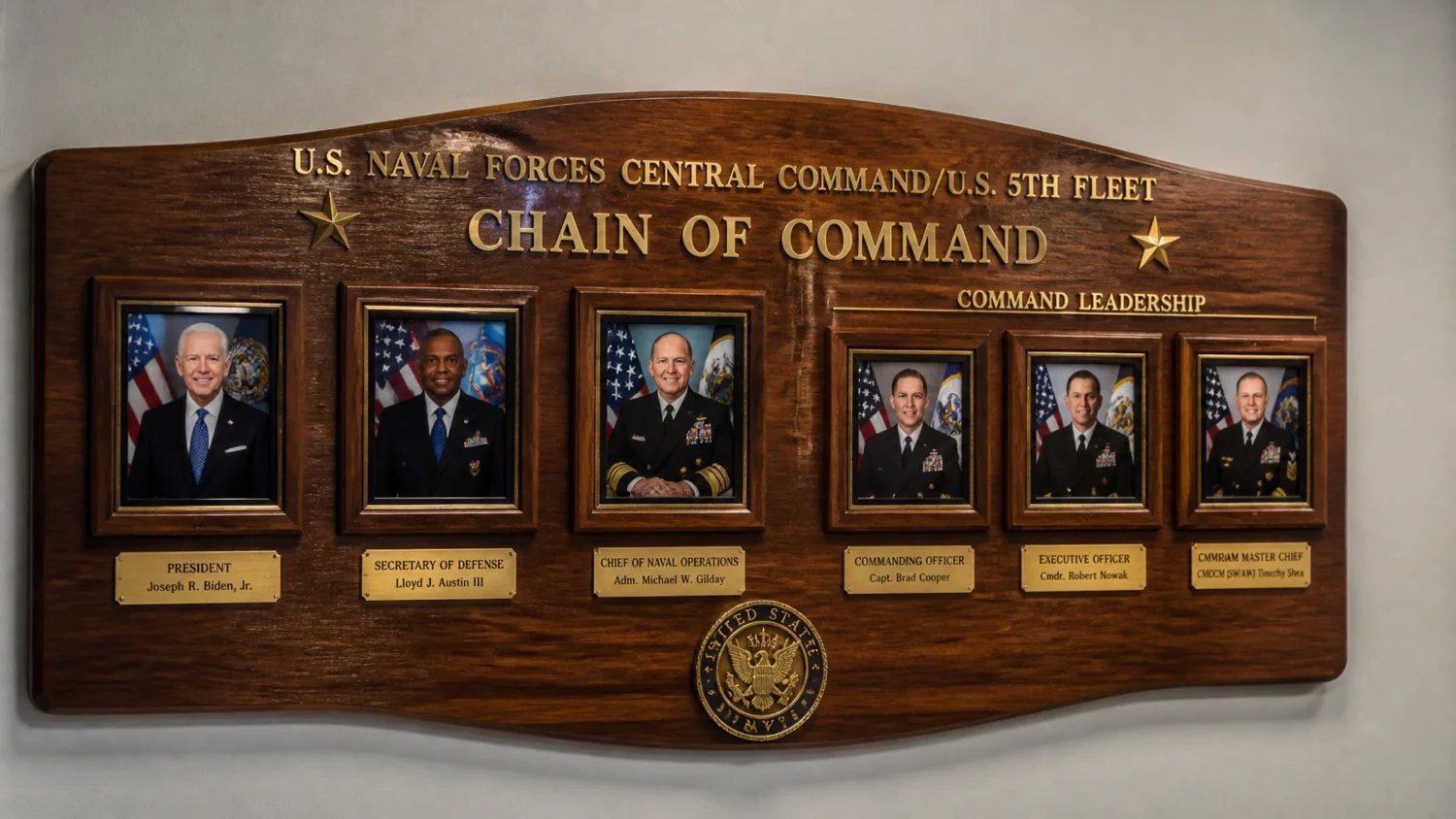
For any U.S. Navy command, the quarterdeck is more than just an entry point; it is the face of the unit. It is where tradition meets daily operations, and where the first impression of your command’s professionalism is cemented. At the heart of this space stands the chain of command board.
Whether you are a newly minted collateral duty officer, a Command Master Chief looking to refresh the mess, or an Admin Officer tasked with an upcoming inspection, understanding the nuances of command boards is essential. A well-organized, high-quality display communicates stability, respect for leadership, and attention to detail.
In this guide, we will walk you through everything you need to know about designing, structuring, and maintaining a professional Navy chain of command board that meets the highest ceremonial standards.
The Strategic Importance of the Quarterdeck Display
In the Navy, the chain of command is the bedrock of order and discipline. Every Sailor must know who they report to, from the President of the United States down to their Immediate Superior in Command (ISIC) and their local Commanding Officer.
While digital rosters and "Plan of the Day" notes exist, the physical chain of command board on the quarterdeck serves as a permanent, visual reminder of that structure. It provides:
- Visual Leadership: It humanizes the hierarchy, putting faces to the names of those who lead the fleet.
- Professionalism: A clean, uniform display signals to visitors, inspectors, and new Sailors that the command values its heritage and standards.
- Instructional Value: It is a primary tool for Sailors studying for boards or preparing for inspections.
Designing Your Layout: Operational vs. Administrative
While there is no single, rigid Navy-wide instruction for the layout of a chain of command board, tradition and local Standard Organization and Regulations of the Manual (SORM) typically dictate the flow.
Most effective chain of command boards are structured in one of two ways:
1. The Vertical Hierarchy
This is the most common layout, moving from the highest level of authority at the top down to the local command level at the bottom.
- Top Row: The President, Secretary of Defense, and Secretary of the Navy.
- Middle Rows: The Chief of Naval Operations (CNO), MCPON, and Fleet/Numbered Fleet Commanders.
- Bottom Row: The Command’s local leadership (CO, XO, CMC).
2. The Split Column (Operational & Admin)
For larger commands or ships with complex reporting structures, the board is often split into two columns:
- Operational Chain (Left): Follows the path through Task Forces and Numbered Fleets (e.g., 5th Fleet, 6th Fleet).
- Administrative Chain (Right): Follows the path through the Type Commander (TYCOM) like SURFLANT or AIRLANT.

Essential Components: From POTUS to CMC
To ensure your board is inspection-ready, you must include the correct personnel and ensure their titles are precise. A standard Navy board usually includes the following tiers:
National and DoD Leadership
- President of the United States (Commander in Chief)
- Secretary of Defense
- Secretary of the Navy
Senior Navy Leadership
- Chief of Naval Operations (CNO)
- Master Chief Petty Officer of the Navy (MCPON)
Intermediate Command
This section is highly dependent on your specific location and mission. You might include your Fleet Commander, Strike Group Commander, or Squadron OIC.
Local Command Leadership
This is often the most viewed section of the board. Accuracy here is non-negotiable.
- Commanding Officer (CO)
- Executive Officer (XO)
- Command Master Chief (CMC) or Senior Enlisted Advisor.
For specialized departments, such as security or medical, you may also require a directory-style board. For example, our work for Naval Weapons Station Earle’s Security Department featured a comprehensive directory for roles like SECO, DLCPO, and ATO.

Customization: Sizing, Material, and Craftsmanship
When you transition from a "standard" issued board to a custom military plaque or handcrafted board, the difference is immediate. At Moody’s Seabag 2 Inc 2 Inc., we focus on using premium hardwoods and custom engraving to ensure your board lasts for decades.
Choosing Your Material
- Mahogany & Cherry: These deep, rich woods offer a traditional, formal look perfect for shipboard quarterdecks or high-traffic shore commands.
- Oak: Known for its durability and prominent grain, oak is a classic choice for a rugged, timeless display.
- Brass Details: Incorporating polished brass signs and engraved nameplates adds a level of sophistication that plastic or printed labels simply cannot match.
Sizing Considerations
Before ordering, measure your available wall space carefully. A board that is too small looks lost on a large bulkhead, while a board that is too large can obstruct traffic or interfere with other ceremonial items like the ship's bell or the Commanding Officer’s podium.

The Moody’s Seabag Difference: Built by Chiefs, for the Fleet
We don’t just "make" boards; we build them with an understanding of the traditions they represent. Founded by retired U.S. Navy Chiefs in 2002, Moody’s Seabag 2 Inc 2 Inc. is a veteran-owned and women-owned business located just minutes from Naval Station Norfolk.
We understand the "Chief’s Standard." When we design command boards, we ensure:
- Alignment and Precision: Every photo holder is perfectly aligned, and every engraving is sharp and clear.
- Durability: Using top-grade hardwoods and professional finishes ensures the wood won't warp or fade in the humid environment of a ship's quarterdeck.
- Ease of Use: Leadership changes frequently. Our boards are designed with easy-swap photo slots and nameplates so you can update the display in minutes without needing tools.
Maintenance and the "Relief" Process
A chain of command board is a living document. One of the most common mistakes commands make is leaving an outdated photo or a misspelled name on display. This is a "gig" waiting to happen during an inspection.
Best Practices for Maintenance:
- Assign a Custodian: Usually, the Admin Department or the PAO is responsible for keeping the photos current.
- Standardize Photos: Ensure all photos are the same size, taken in the same uniform (usually Service Dress Blues or Khakis), and have the same background.
- Update Promptly: As soon as a Change of Command or a Change of Charge ceremony is concluded, the board should be updated. This is a point of pride for the incoming leadership.
- Polish the Brass: If your board features custom brass engraving, a light polish once a month will keep the display looking "squared away."

Ready to Upgrade Your Command Display?
Your quarterdeck tells a story about who you are as a command. Don't let that story be told by a plastic frame and a piece of tape. Invest in a display that reflects the honor and pride of your service.
At Moody’s Seabag 2 Inc 2 Inc., we are ready to partner with your command to design a custom board that fits your specific needs, whether you need a single chain of command board or a full suite of quarterdeck furniture and custom shadow boxes.
Design. Build. Honor.
Schedule a Consultation with our Design Team or browse our gallery of past work to see how we’ve helped other commands near Norfolk and worldwide maintain their traditions with excellence.