
The Last Salute: What a Custom Presentation Paddle Really Says After 20 Years of Service
At the end of a long Navy career, the room becomes still.
The flags are posted. The sideboys are in place. Family members sit close, and shipmates gather with the quiet attention reserved for a meaningful milestone. Awards and certificates may be presented. A flag may be folded and placed into waiting hands. Then, at the proper moment, a command representative steps forward with a gift chosen specifically for the sailor who is leaving active service.
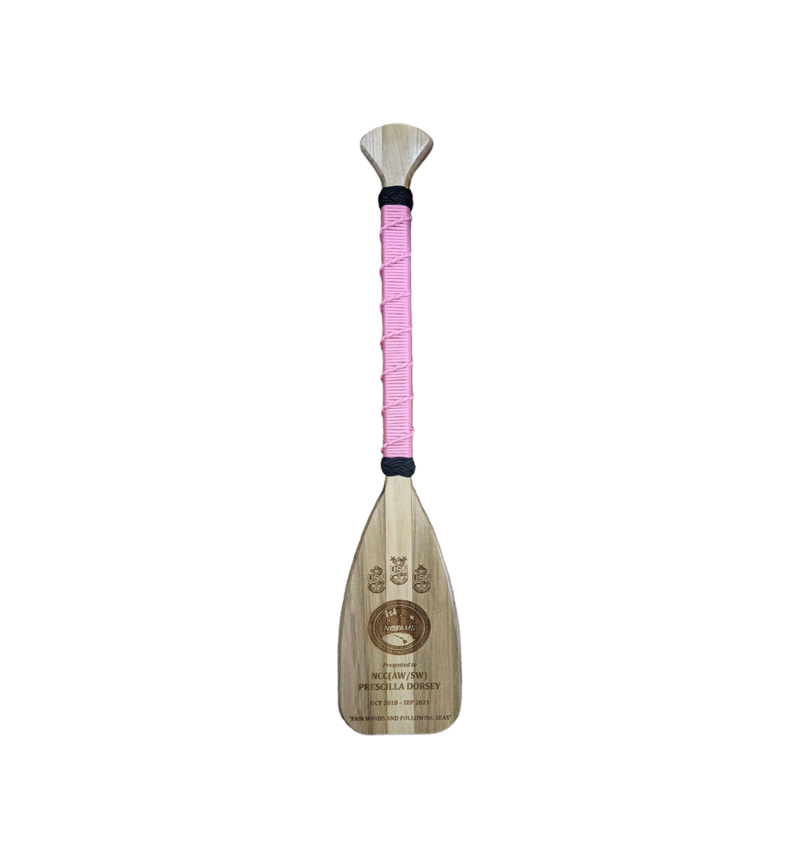
Sometimes that gift is a custom presentation paddle.
It may look simple at first: wood, rope, engraving, and the insignia of a command or rate. But in the hands of a retiring sailor, it carries much more than its physical weight. It represents years of watchstanding, leadership, sacrifice, friendship, and duty. It gives the command a way to say what formal documents cannot always express:
You served honorably. You mattered here. You will be remembered.
A Retirement Ceremony Built Around Recognition
A Navy retirement is not simply a departure from a job. It is a formal transition from one phase of service to another.
According to MILPERSMAN 1800-010, a retirement or Fleet Reserve ceremony is intended to express the Navy’s appreciation for many years of faithful and honorable service. The instruction also identifies the presentation of gifts as part of the ceremony process. Appropriate gifts may include shadow boxes, plaques, and other meaningful items selected through separate resources.
That detail matters. A presentation gift is not a replacement for the retirement certificate, flag, or official recognition. It serves a different purpose.
The certificate records the service. The flag represents the nation. The paddle remembers the people.
It is the physical object a sailor can bring home and hold long after the last command announcement, the final salute, and the boatswain’s pipe have faded into memory.

Why a Paddle?
The presentation paddle belongs to a broader maritime tradition of giving retiring sailors a personal object that recalls the ships and crews they served with. Earlier generations may have received a sea chest, sword, or other nautical keepsake. Today, commands and messes often choose an engraved paddle because it combines ceremony, craftsmanship, and symbolism in one unmistakable form.
A paddle is a tool for movement. It helps guide a boat and move it forward. That makes it a fitting representation of a career shaped by teamwork and steady effort.
No sailor advances a ship, department, or command alone. Progress comes from people pulling together, standing the watch, solving problems, training the next generation, and accepting responsibility when conditions are difficult.
After 20 years of service, the paddle can represent:
- The voyage: deployments, duty stations, underway periods, and miles traveled.
- The crew: the shipmates, Chiefs, officers, mentors, and Sailors who shared the work.
- The watch: the long hours and unseen responsibilities carried on behalf of others.
- The direction: the leadership that helped a division, department, or command move forward.
- The legacy: the knowledge and standards passed to those who will serve next.
The Navy does not prescribe one official meaning for presentation paddles. Their significance comes from the way commands use them and the details they choose to place on the face of the paddle. When the engraving reflects a sailor’s actual career, the object becomes personal rather than generic.
The Engraving Turns Wood Into a Career Record
The wood provides the foundation, but the engraving gives the paddle its voice.
A well-configured military presentation paddle may include the retiree’s name, rank or rate, command crest, warfare insignia, years of service, retirement date, ship name, department, and a message from the Chief Petty Officer Mess or command. Every element should be selected with care and arranged in a balanced layout.
The goal is not to place every possible emblem on the surface. The goal is to identify the details that tell the sailor’s story most clearly.
A command might choose to highlight:
- The current command or final duty station
- A significant ship or platform
- A warfare qualification
- A rating badge or specialty
- A command motto
- A retirement date
- A phrase associated with the sailor’s leadership
- A personal message from shipmates
The best designs leave room for the wood to remain visible. Premium hardwood has its own character: grain lines, natural variation, warmth, and depth. These qualities help distinguish a handcrafted paddle from a mass-produced award.
Over time, the wood may become part of the memory as well. A retiree may remember the command presentation every time they notice the grain, touch the rope-wrapped handle, or read the names and dates engraved into the blade.
The Moment of Presentation
The ceremony itself is where the paddle takes on its full meaning.
The person presenting it may be a commanding officer, executive officer, Command Master Chief, Chief of the Boat, department head, or representative of the Chief Petty Officer Mess. The presenter may speak about the retiree’s accomplishments, but the strongest words are often direct and personal.
They may mention the difficult deployment. The young Sailors who became better leaders under the retiree’s guidance. The watch sections that depended on steady judgment. The families who endured long separations. The command challenges that required patience, courage, and professional discipline.
Then the paddle is placed in the retiree’s hands.
That handoff often creates a pause. The object is substantial enough to feel ceremonial, yet personal enough to feel like a gift from people who know the recipient. It can carry the command’s insignia while still belonging entirely to one sailor.
For the family, the presentation offers another kind of recognition. It acknowledges that service affected more than the person in uniform. Spouses, children, parents, and loved ones carried their own responsibilities through transfers, deployments, holidays apart, and uncertain schedules.
The paddle is presented to the sailor, but its meaning often belongs to the entire Navy family.
Craftsmanship That Respects the Occasion
A ceremonial gift should be built with the same attention to detail that the occasion deserves.
At Moody’s Seabag 2, presentation paddles are made in-house near Naval Station Norfolk using hardwood, custom laser engraving, and rope-wrapped handles prepared for presentation. The company was founded by retired U.S. Navy Chiefs and brings practical knowledge of Navy ceremony, CPO traditions, and command expectations to the design process.
The Standard Paddle is described as a light wood paddle that is laser engraved and wrapped with fancy work. Commands and families can provide the engraving information and select colors for the shaft and knots. A coin recess can also be added when a challenge coin is part of the presentation.
These details are not merely decorative. Rope color can reflect a command, ship, warfare community, or personal preference. An engraved coin recess can give the retiree a permanent place for a coin associated with the final command or a career-defining assignment.
The process should begin by identifying the story the paddle needs to tell. Then, configure the layout, verify every name and date, confirm insignia and wording, and review the final design before production. Precision matters because a retirement ceremony is not the place for rushed decisions or avoidable errors.

A Gift That Outlasts the Ceremony
A presentation paddle does not belong in a drawer simply because the ceremony is over.
It can be displayed in a home office, den, entryway, or collection of service memorabilia. It can hang near a retirement shadow box, command photograph, folded flag, or case of challenge coins. In that setting, it becomes part of a larger visual history.
A shadow box may preserve medals, ribbons, badges, and flags. A paddle often preserves the relationship between those achievements and the people who witnessed them.
Together, these objects tell a fuller story: what the sailor earned, where they served, what they stood for, and who stood beside them.
Moody’s Seabag 2 also builds custom military shadow boxes and other ceremonial displays for commands, families, and retiring service members. Whether the final tribute is a paddle, plaque, shadow box, or combination of items, the purpose remains the same: to preserve service with accuracy, pride, and respect.
What the Last Salute Really Says
After 20 years, a custom presentation paddle says that service was not overlooked.
It says that the command remembers the sailor’s contribution beyond a personnel record or list of awards. It recognizes the early mornings, the difficult decisions, the training sessions, the maintenance periods, the underway watches, and the moments when leadership mattered most.
It says that shipmates understand the cost of leaving active service because they have shared the same demanding profession.
Most of all, it says that the sailor is not simply walking away from the Navy. They are carrying a part of its history with them.
The wood carries the years. The engraving carries the names and places. The rope recalls the maritime tradition. The command carries the memory.
And when the final words are spoken: when the sailor is relieved, the watch is turned over, and the last salute is rendered: the paddle remains as a lasting reminder:
You stood the watch. You served with honor. Your legacy continues.
For commands and families planning a retirement presentation, start early, gather the correct service details, and choose an object worthy of the milestone. Moody’s Seabag 2 offers in-house craftsmanship, custom engraving, local service near Naval Station Norfolk, and shipping for Navy personnel around the world. Service members, first responders, and their families may also receive 10% off with code SEABAG10, offered as a gesture of appreciation for those who serve.